Thanks so much for visiting. My blog has moved! Redirecting…

You should be automatically redirected. If not, please take a moment to visit Nika's Culinaria (new blog) and update your bookmarks.

Nika's Culinaria - Eat With Your Eyes: July 2006

Nika's Culinaria - Eat With Your Eyes

Culinary Photography


Handcrafted organic butter

Lately, I have been focusing on some basic cooking with my 9 year old daughter Q. You saw her and her little sister KD in a recent post on making Challah. We also did the whole homemade strawberry jam making post (with upcoming blueberry post). We have gotten a lot of good feedback from these series so I am continuing to shoot our basic skills work.

Today is a series of rather static non-action shots of how to make butter. I was testing a new light set up and it was geared more toward product photography than editorial type of shots.
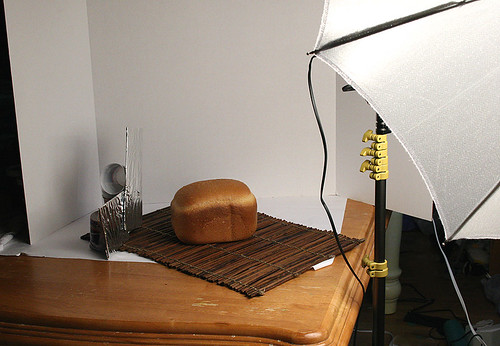
bread-shoot-jpg


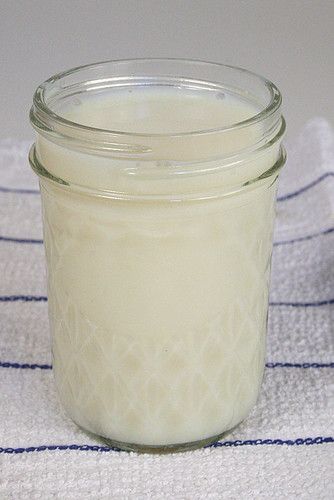
We started with organic sweet jersey cream. Its really worth the money to go with this more expensive product because you get a wholesome, flavorful, and colorful butter in the end.
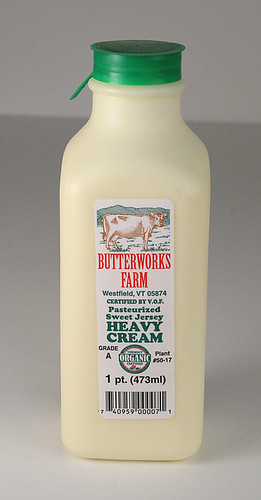
Making homemade organic butter - 2


Why does it matter if the animals pastured on greens instead of cereals from a bag?

The chlorophyls and other colored plant constituents (phytochemicals like beta carotenes) are partially carried over into the milk and thus cream. Commercially produced milk from huge dairies does not have these phytochemicals and thus butter made from this sort of milk must have food coloring added. The breed of dairy cow also determines butter color, Jersey (which we used here), tends to have a more yellow butter color.

Wikipedia entry for butter


Back to the "Making of Butter" (Imagine a majestic announcer voice like from Monty Python)

Ingredients:

COLD Heavy Cream
(try not to get the homogenized type, the fat droplets have been hyperfractured and may be a bit more difficult to coalesce into butter)

Salt, to taste (at the end, do not add to the cream)

Hardware:

A large plastic soda bottle that has been thoroughly washed
(If you need to, rinse with alcohol or a light chlorine solution and then rinse with water - A LOT. I figured the carbonic acid in the soda (VERY LOW pH) would have kept anything nasty from growing in the seltzer bottle I used)

One COLD clean glass marble

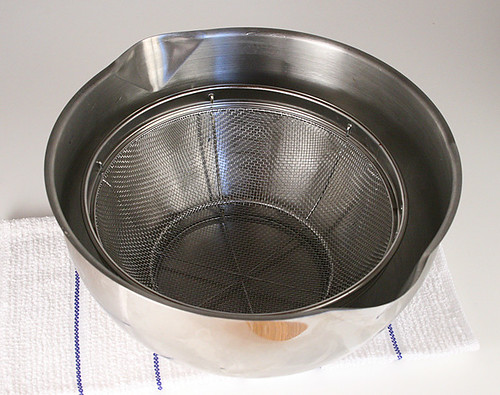
COLD stainless steel bowl

COLD stainless steel or plastic fine sieve

COLD spatula

Xacto knife

Directions:

Make certain that your bowl and sieve are washed and in the fridge cooling.

Assemble your cream whipping supplies: cream, soda bottle, and marble.
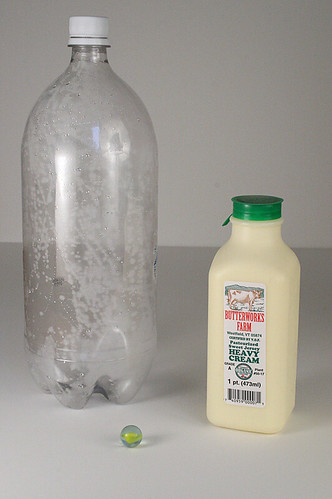
Making homemade organic butter - 1


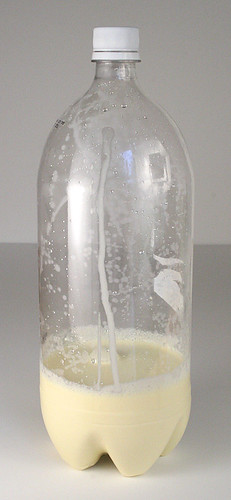
Put the marble and cream inside of the soda bottle.
Making homemade organic butter - 3


Now hand the bottle to your child and have him/her shake the bottle. First it will be what you expect, sloshing cream and a marble rattling about.

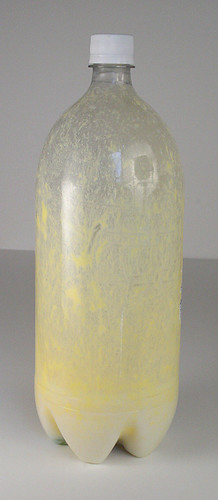
Then the solution changes as the fat droplets begin to come out of solution and the marble rattling sound goes away (must be coated with fat). This may happen quickly (like in 5 minutes for us) or longer (perhaps 15 minutes, depends on the size of you container. The bigger container with more shake room the faster the process is.)

Continue shaking until the sound of the rattling marble comes back. Now the fat has come together in a nice big ball in the soda bottle and you are done with shaking. This might be quick or take 15 - 30 minutes. If its taking a while put the bottle in the fridge to chill after about 20 minutes, you do not want the fat to melt.

Once done, have the child rest, maybe some juice would help.
Making homemade organic butter - 4


Put the bottle in the refrigerator so that it can get a nice chill back.

Have your bowl and sieve ready.
Making homemade organic butter - 5


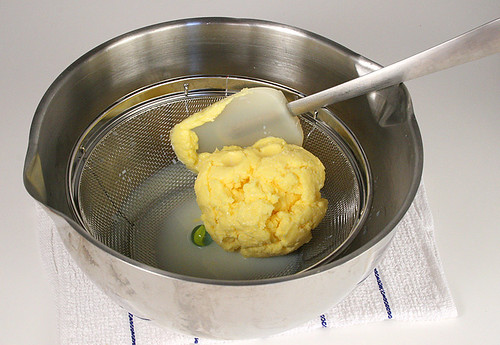
Pour buttermilk out the top of the bottle and then cut it open around the middle. (Dont let the kid do this, blood is not a recommended ingredient in butter) Let the ball of butter drop into the sieve and use a cold spatula to scrape down butter on the walls of the bottle.
Making homemade organic butter - 6


Save the buttermilk for other uses.

Making homemade organic butter - 7


Rinse out the bowl with cold water and then put the butter in the bowl.

Massage the butter with the spatula by pushing it against the side of the bowl repeatedly. You will see more buttermilk come out of the butter, rise with cold water.

Continue until no buttermilk comes out. (The buttermilk, if left in, will make the butter go rancid).

Add some salt and mix in. You will want to do this until a taste test tells you it is salty enough for you.

Store the butter in a container that excludes air (oxygen will form free radicals with the fat – goes rancid).
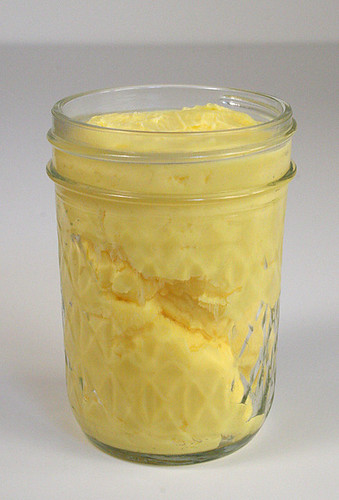
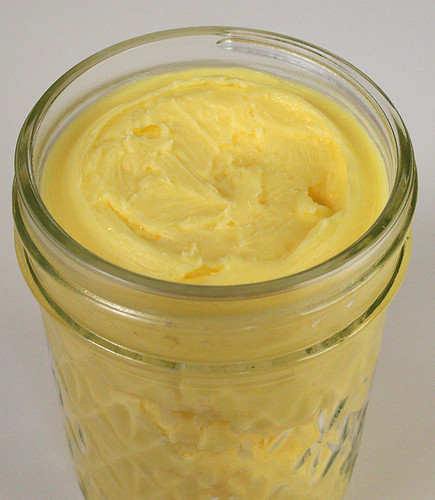
Making homemade organic butter - 8


Making homemade organic butter - 9


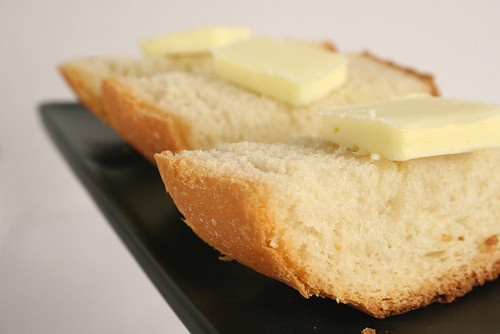
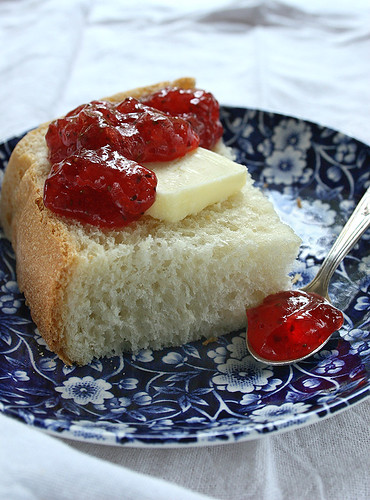
Enjoy on some fresh bread!

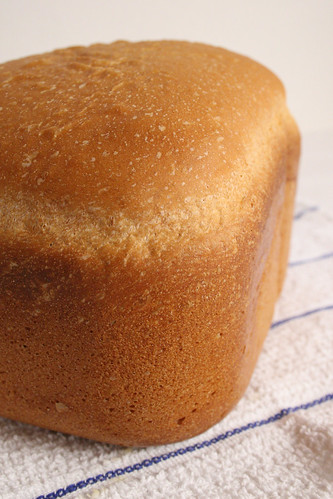
3-quarter-bread-jpg


crumby


(This is actually a shot with store bought butter but I could not resist :-))


Technorati taggage:
, , , , , , , , , , , , , , , , .

Strawberry Jam Delight

Bread and jam - 3


When I was growing up, summer jam was never something we made in my house. We lived near corn fields in Illinois and Iowa and would enjoy sweet corn but we never canned it. I think my mother had done quite enough of that on the farm she grew up on so she didn’t feel driven to do it later. She made whole wheat bread but we never even had store bought jam at home, it was considered junk food. Today, I still do not eat jelly or jam unless it is on the table at a restaurant and it looks interesting. Nor do we eat peanut butter and jelly sandwiches due to food allergies.

With all this you might wonder why I would even chose to make strawberry jam at all.

Blame blueberries.

We live on a small mountain where wild and domestic blue berries grow with complete abandon. The domestic patches at nearby orchards have been slow to come up but now we are starting the picking season.

Strawberry jam was just a practice run for the blueberry jam we will be making after our pickfest!

So how did it turn out?

Even though this was a proof-of-concept for me, WOW, does homemade fresh strawberry jam taste GOOD and nothing like the stuff you buy at the grocery store. It is worth the trouble 10 times over.

How is it different? It have many layers of flavor, not just the flat monotone of artifical flavors in commercial jams. The flavor profile develops all across the tongue with at least three different seperable flavor experiences, finishing pleasantly at the back of the throat. I made mine chunky so it really perked up the texture and experience.

This jam is pretty easy to make especially since it doesn't require a pressure cooker, just a boiling water bath.

I took the recipe from the insert that you find tucked inside Ball Fruit Jell Pectin and it could not be easier.

Strawberry Jam

Ingredients:

1 box of Ball Fruit Jell Pectin
5 C crushed strawberries (2 quarts)
1/4 C Fresh Squeezed lemon juice
7 C sugar

8 - 8 oz. Ball jelly jars with sealing domes and rings

Directions (some of these are my own and some from the insert):

But a large pot of water onto boil. You will want to cover your jars with 1 and 1/2 inches of water after all are added. Have some hot boiling water available to top it off.

Jar cleaning (My method):

Into an empty dishwasher place jelly jars, lids, and rings. Run on the most robust setting (we used "pots and pans") without any other dirty dishes. If you are not ready for the jars at the end of the cycle keep setting the machine back to the beginning of the dry cycle to keep them hot and relatively sterile.
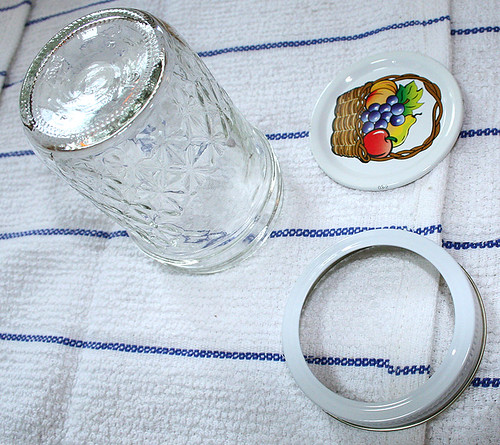
Making Strawberry Jam - 6


Clean strawberries by rinsing in cold water, cutting off the leaves and removing the white core under the leaves. Cut them in half and let drip dry a bit while you clean the whole batch.
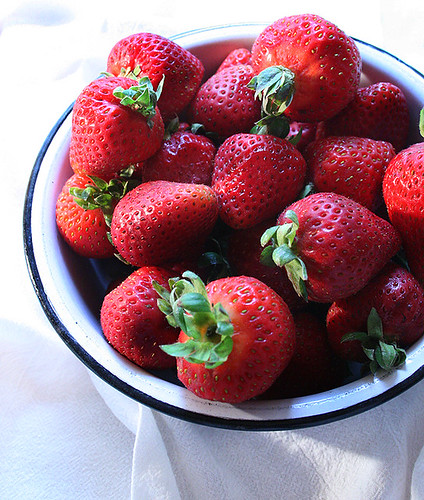
Making Strawberry Jam -1


Cut the berries in half and put a portion in a large freezer bag, close, and crush the strawberries. If you like a chunky jam do not crush the berries into a liquid! Do not use a food processor. You can also use a bowl and potato masher if you prefer.
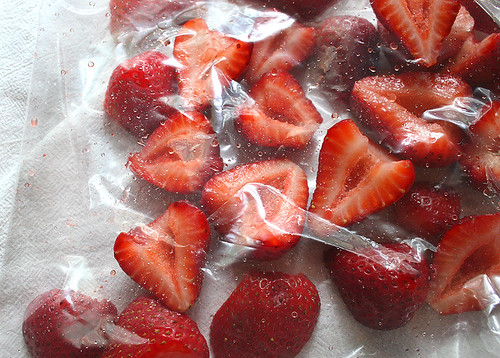
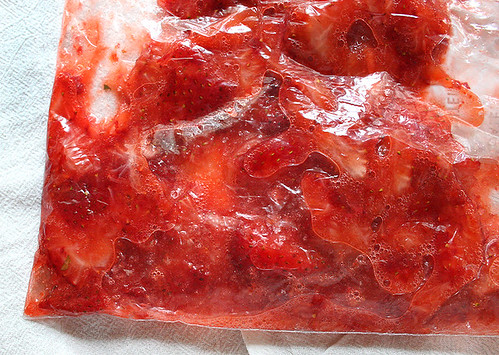
Making Strawberry Jam - 2


Making Strawberry Jam - 3


Put 5 cups of crushed strawberries into a large pot.

Add 1/4 cup freshly squeezed lemon juice to the pot.

Add the entire packet of pectin and stir well.

Bring this mixture to a full boil, stirring constantly.
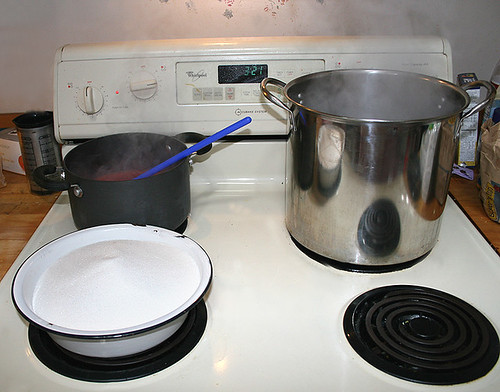
Making Strawberry Jam - 4


Have all 7 cups of sugar measured and add to the boiling strawberry mixture.
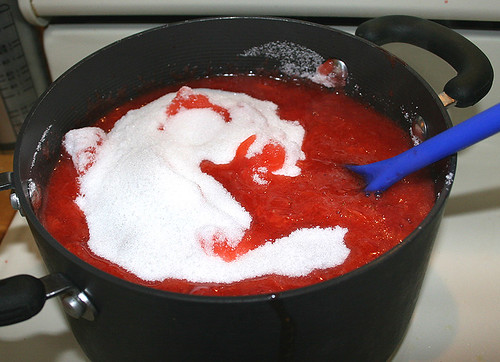
Making Strawberry Jam - 5


It might seem like 7 cups will not dissolve but it does pretty quickly.

Bring this to a hard rolling boil (if your pot is not big enough it WILL overflow) for 1 minute. Stir this constantly. Remove the foam that forms on the top.

Fill one jar at a time, leave 1/4 inch at the top. (this is called headspace)
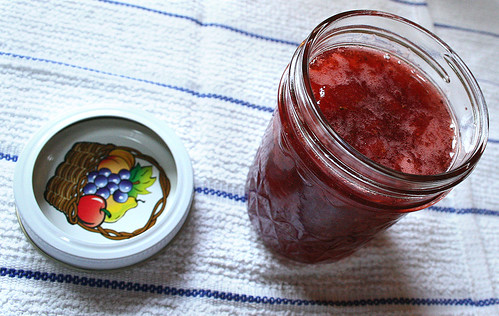
Making Strawberry Jam - 7


Wipe the edge and threads of the jar with a damp cloth so that nothing impedes lid sealing.

Put sealing dome lid on and then the ring, screw on tight (finger tight).

When you have filled one jar gently put it into the boiling pot of water on your stove and cover.

Repeat until all strawberry mixture is gone, adding each jar as it is closed.

Make sure the jars are covered by at least 1 and 1/2 inches of boiling water.

Boil 10 minutes if you are in a kitchen located under 1000 feet altitude, 15 minutes between 1000 – 3000 feet, 20 minutes between 3000 – 6000 feet, etc. Cover with a lid.

Carefully remove jars after boil time to a cloth on your counter.

Allow to cool 12 – 24 hours and then check each lid for a seal. If you can push down on it you will have to either pitch that jar-full or re-sterilize it. The lid should not move when you press down on it.
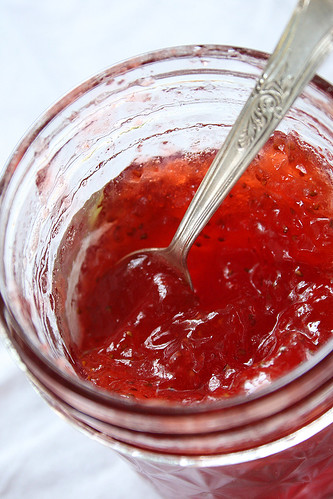
Bread and jam - 5


These jars can be stored in a dark cool pantry for up to one year.

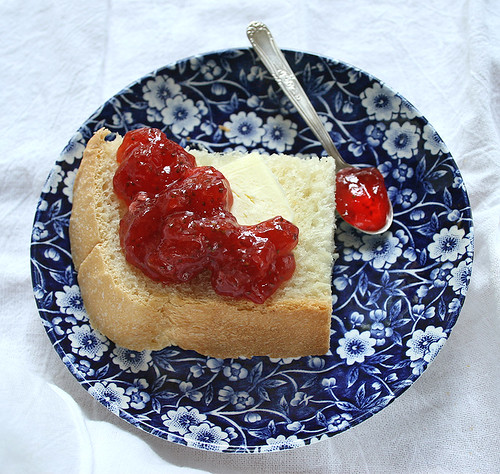
Enjoy it with fresh homemade bread!
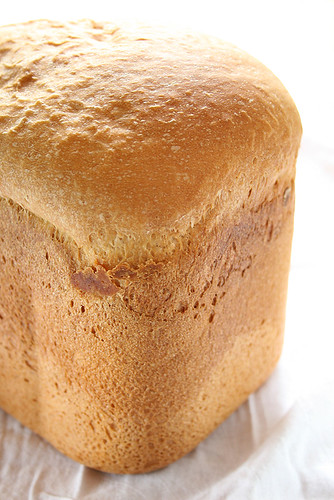
Bread and jam - 1


Bread and jam - 4


Technorati taggage:
, , , , , , , , , .

Delicious Salmon in Phyllo

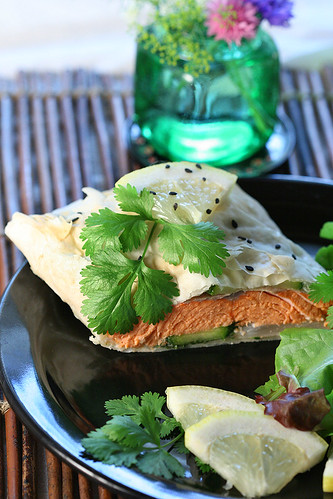
Summer Phyllo Salmon


In my personal experience, being pregnant means I have to eat a lot of fish that has omega 3 oils. This means a lot of salmon. A LOT.

This can get tedious, even with the most perfect salmon one can get their hands on. For this reason, I have put together the following recipe that brings together wild caught Alaskan salmon, summer squash, fresh cilantro from my garden, brie, and organic phyllo dough.

Delicious Salmon in Phyllo

Ingredients:

Organic Phyllo Dough (The Fillo Factory Fillo Dough)
1/2 stick butter, melted
2 lbs. salmon fillets, (deboned and no skin)
1 medium summer squash
1/4 vidalia onion (must be sweet and mild)
Course sea salt, to taste
4 - 3 inch by 1.5 inch slices of brie, can leave the crust on
Fresh ground pepper
Fresh cilantro, several sprigs for phyllo pocket and some for garnish.
Lemon slices for garnish

Directions:

Preheat oven to 400 F.

Slice summer squash evenly and thinly. Place on paper towels, sprinkle with sea salt, and set aside. This will reduce some of the liquid in the squash so that the phyllo doesn’t get overloaded with squash water.

Melt the butter over low heat in a small pan.

Using proper phyllo-handling practices, lay down a layer of phyllo (whole sheet) and paint with butter-soaked pastry brush.

Repeat until 5 layers have been assembled, cut in half along the short axis so that you have two equal pieces. You will get rectangles. You can do this anyways you wish, get artistic if you like.

I made two sets of 5 layers so that I would have 4 rectangles to work with.

Set aside.

Slice the Vidalia onion very thinly; slice brie to about 3 inch by 1.5 inches, not too thick; wash several sprigs of cilantro in cold water and set all aside.

Portion the salmon into 4 equal amounts. Allow salmon to lose the chill from the refrigerator until it is almost room temp. Season with course sea salt and fresh ground pepper.

Center the salmon in the middle of the phyllo rectangle and then layer on squash slices, onion, cilantro, and brie. Fold over edge of the phyllo rectangle, paint with melted butter, and then fold over second half to form a pocket. Turn it over and place seam-side down on a parchment lined baking sheet. Brush with more melted butter.

Repeat this assembly with remainder of fish and vegetables.

Bake in the 400 F oven for 15 minutes. Watch to be sure that the phyllo does not burn on top.

Serve with cilantro and lemon garnish as well as fresh mesclun greens.

Enjoy with white wine, iced tea, or lemonade!
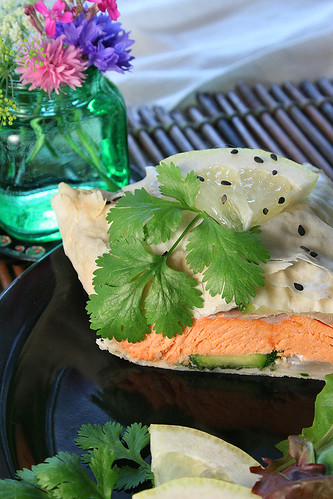
Summer Phyllo Salmon 2


This does really well as leftovers the next day, eat chilled. Be sure to not store this with moist items as the phyllo dough will become really mushy.

Strawberry Fields Forever

strawberry!


A promise of things to come in the next few days.

I am whipping up my first batch of strawberry jam.

Will share all the delicious details!

Amazing Gadget: Chef'n Vegetable Peeler

Goodness, I have got to take a moment to rave about this new gadget I bought the other day called a Chef'n Vegetable peeler. It's a vegetable peeler that is different from anything else I have seen before.

chef'n vegetable peeler (NOT MINE)


You slip this onto your finger with the blade facing away from your palm. You then sort of run your hand over the vegetable (I was peeling the lower parts of asparagus) and it's sharp blade peels efficiently. It feels effortless.

I ALWAYS cut myself with the blade of a regular peeler. I slip or it twirls around at the wrong moment. I get fatigue in my hands from holding regular peelers too (especially when peeling potatoes, yuck). (Ok, I am a bit of a peeling wuss but at least I eventually get the job done!)

This peeler is like a dream. It feels like an extension of my hand and with just a small amount of practice I was peeling delicate asparagus like a demon.

It also leaves your hand open for use because you are not holding something as its attached to your finger. So if you need to catch a slippery vegetable before it flies away from you (that's me and potatoes) you can.

It comes in this avocado color as well as stainless steel with black, stainless steel with white, sunflower, and tangerine.

Here is the latest update on our organic deck garden here in central Massachusetts. You may remember that this all got a very late start but we do what we can!

For those of you not familiar with earlier posts about this garden, here is a list of them:

Local foods - Organic deck garden 2006

Hail-recovery and happy sunshine


Why do I not just plant in the ground? I have Rambo rodentia and rabbits who would eat everything up in a flash if I gardened in the ground (I have been there once before, I don't need that aggravation).

Deck garden at the beginning (6-8-06):
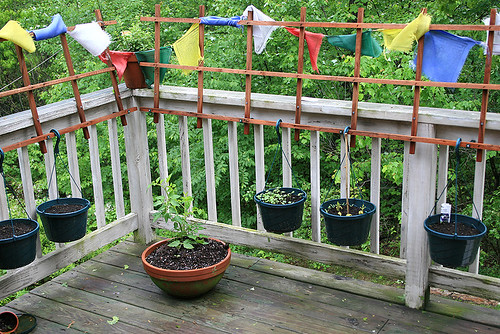
new-garden - Our deck garden


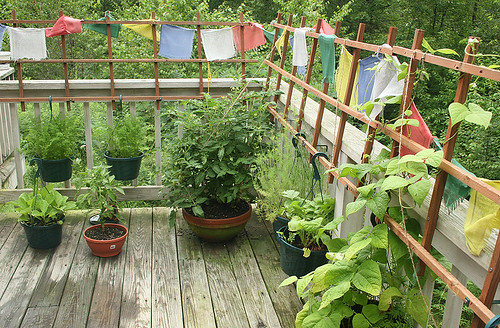
Deck garden today (7-23-06):

Deck Garden 7-22-06


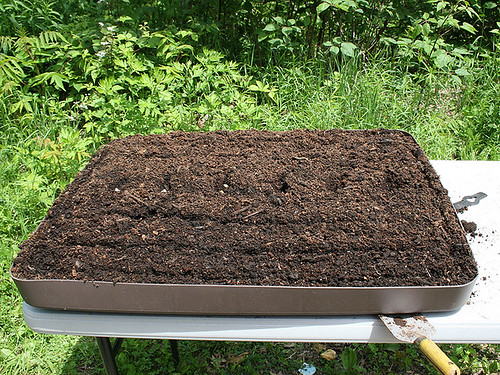
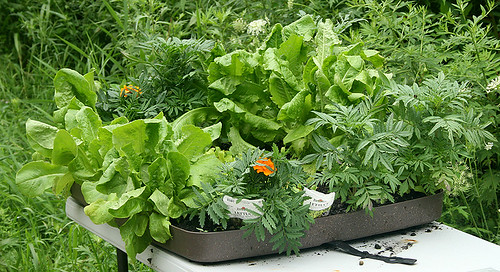
Successional Lettuce planting then:

lettuce plot 7


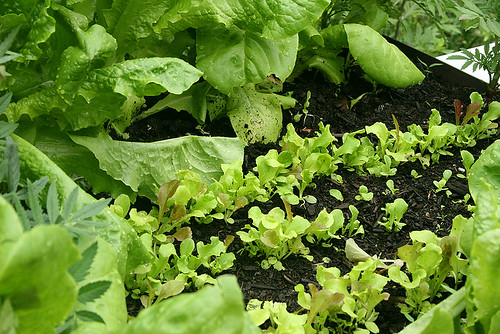
Successional Lettuce planting now:
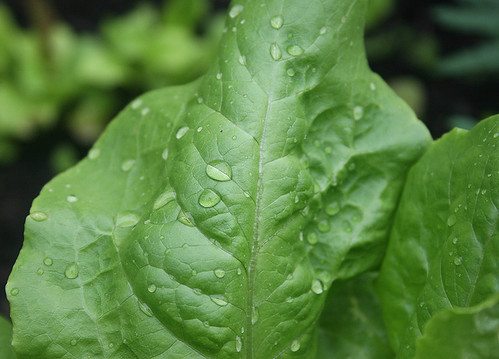
successional lettuce - 1


successional lettuce - 2


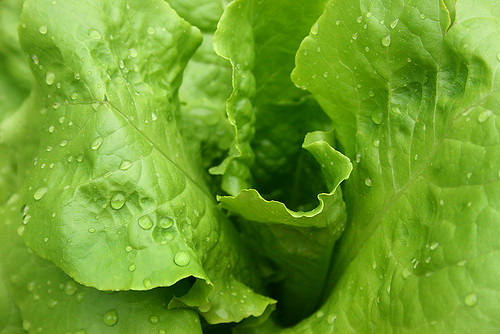
buttercrunch bibb - close


buttercrunch leaf - drops


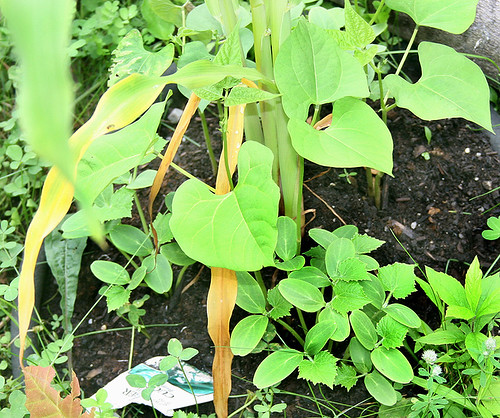
Corn transplanted from the lettuce bed to the side of the house:
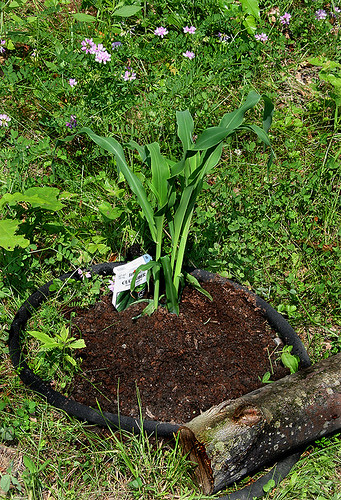
mounds with transplanted corn, close up


Corn, beans, cucumbers, squash, etc today:
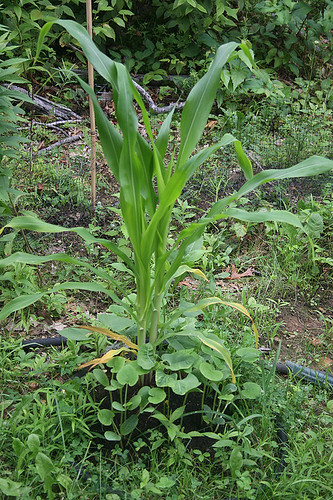
corn 7-23-06


corn 7-23-06 2


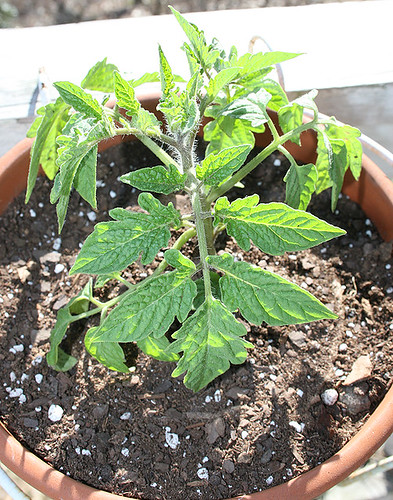
Tomato then:

garden-3


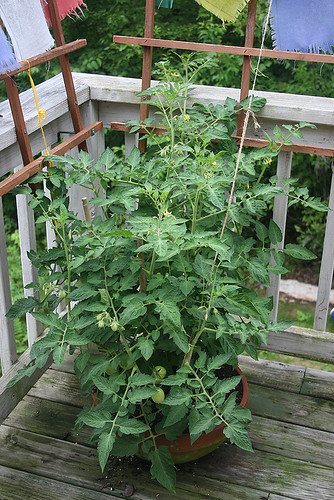
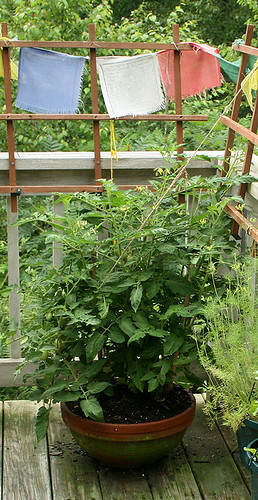
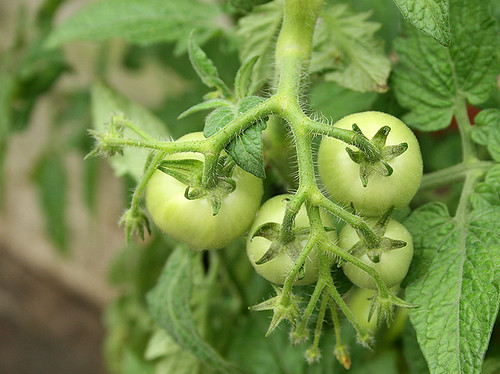
Tomatoes now:

tomato 7-23-06


Big Tomato 7-23-06


cherry tomatoes


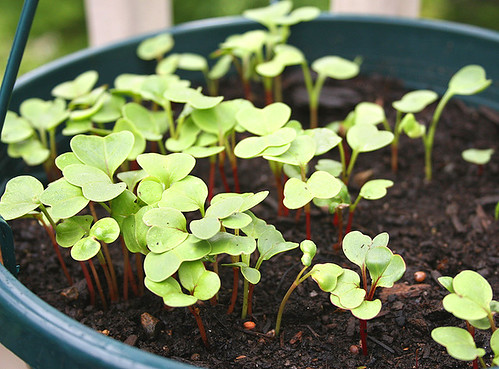
Radishes then:

new-garden radishes


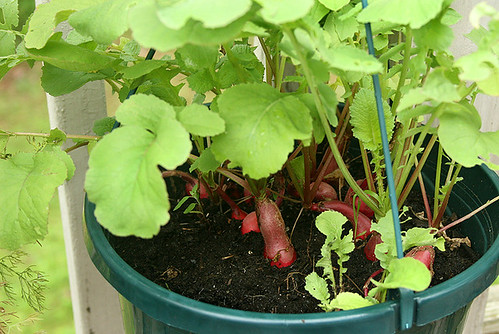
Radishes now (ready to pick):

Radishes, ready 7-22-06


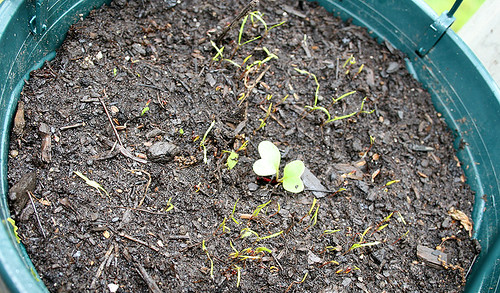
Carrots in the beginning:

new-garden - thumbelina carrots


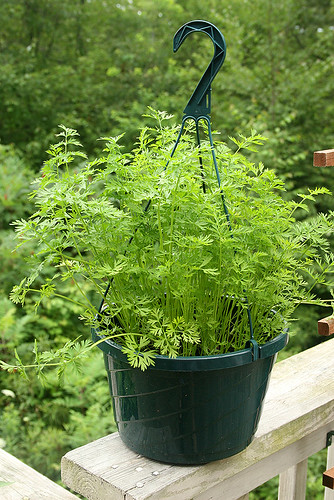
Carrots now:

carrots 7-23-06


Eggplant then:

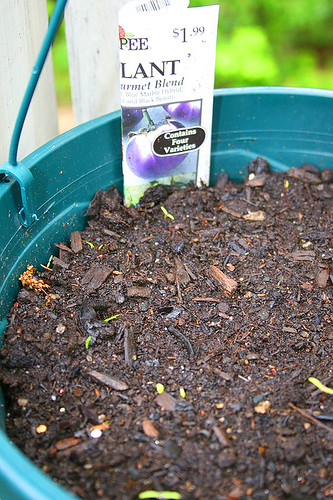
new-garden eggplants


Eggplants now:

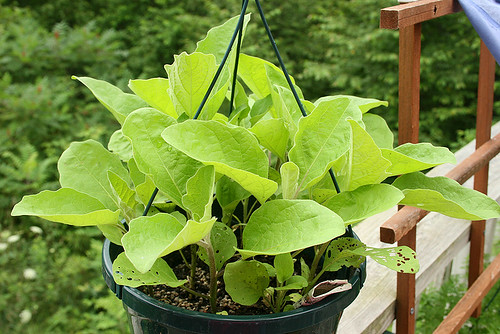
eggplant 7-23-06


Bell Pepper then:

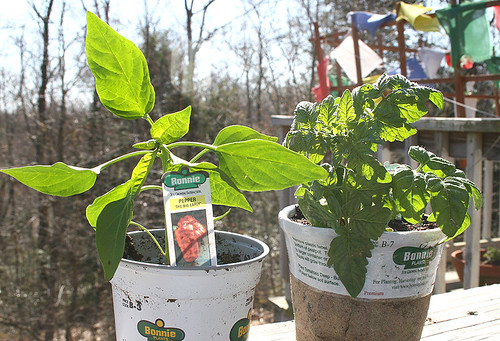
garden-4


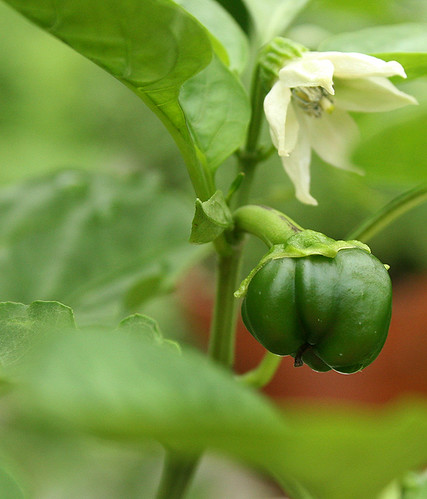
Bell Pepper now:

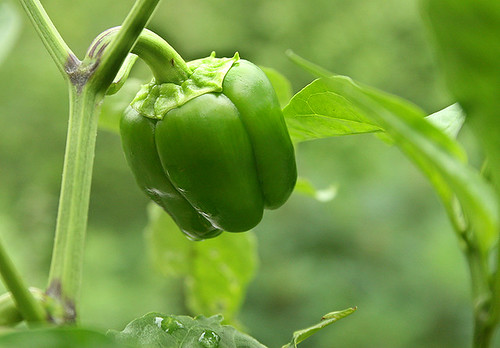
bell pepper - nice shape


bell pepper and bloom - mini


Pole beans then:

new-garden pole beans


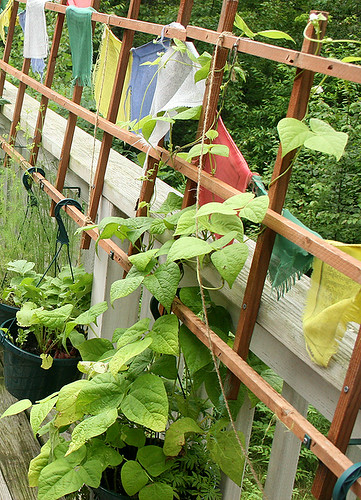
Pole beans now:

Pole Beans 7-22-06


Jalapenos then:

new-garden - Jalapenos


Jalapenos now:

jalapenos at last

Well Fed Network article - Radiant Bloody Marys

Good morning all, hope you are enjoying some bright sunshine like we are here in central MA (for once!).

In this post I am sharing my latest Well Fed Network The Spirit World blog article with you.

Radiant Bloody Marys

Bloody Mary 2

(Image Source: Nika's Flickr)


A Bloody Mary can be a resplendent experience but not if a store bought mix is used. That really just negates the whole concept of a summertime tomato based drink. Why waste your time with the mix when there is a wide selection of fresh tomatoes calling out to be transformed into the perfect drink. In the average grocery store you should find not just red run-of-the-vine tomatoes but scintillating yellow and orange ones.

Summer Tomato Tart - 11

(Image Source: Nika's Flickr)


I have put together the following concoction for you to spread your tomato essence wings. It is up to you whether you wish to add the distilled spirits.

Radiant Bloody Marys

Ingredients:

Freshly juiced tomato juice, 4 oz. (red, yellow, and orange, as you desire)
Horseradish 1/8 tsp
Minced garlic 1/8 tsp
Fresh squeezed lemon juice, 1/2 tsp
Sea salt, pinch
Chopped cilantro, 1/4 tsp, to taste
Tabasco, to taste
Bunch of fresh cilantro

Directions:

I used our juicer for the tomato juice but if you do not have one do the following. Cut up the tomatoes, run through the blender, and filter out skins and seeds. With the juicer there may be some separation of the lighter stuff from clear liquid. Mix the juice before serving.

Combine tomato juice, horseradish, garlic, lemon juice, chopped cilantro leaves, Tabasco sauce to taste, and pinch of salt; mix well. A blender is not really necessary. Pour into serving glass (ice is up to you) and garnish with cilantro.

Seen below served with my summertime tomato tarts.

Bloody Mary 1

(Image Source: Nika's Flickr)

Summertime Tomato Tart

Summer Tomato Tart - 1

(Summertime Tomato Tart © Nika All rights reserved.)


These succulent tarts were a success with the whole family. They have delicate little cherry tomatoes, basil, gorgonzola cheese and some mild chevre. They melt in your mouth, give them a try!

The following in my own recipe and how-to photos.

Ingredients:


The Fillo Factory Fillo Dough (mine is organic from Whole Foods and amazing stuff, MUCH better than the other storebought stuff I have gotten in the past)

Dried beans (not to be eaten, for blind baking)

1/2 stick of butter

Sweet cherry tomatoes

Gorgonzola cheese

Chevre cheese

Fresh basil


Hardware:

Mini-muffin tin

Parchment paper cut into sizes to fit into the tin holes

Pastry brush


Directions:

Summer Tomato Tart - 11

(Bounty of tomatoes © Nika All rights reserved.)


Slice cherry tomatoes in half, coat with good quality olive oil and sprinkle with Italian herbs (or herbs de provence if you prefer).

Summer Tomato Tart - 8

(Sliced cherry tomatoes, ready to roast © Nika All rights reserved.)

Roast at 400 F until the cherries are slightly browned (this is to your taste as well, they need to loose some water and pick up some carmelized flavor).

Summer Tomato Tart - 5

(Roasted cherry tomatoes © Nika All rights reserved.)


Simultaneously, make your fillo dough baskets.

Follow the usual rules with fillo (keeping dough covered to prevent drying) and cut out 3 inch by 3 inch or so squares (big enough to put into the muffin tin and stick up along the sides).

Coat each square with melted butter, layer about 5 squares. Put into the mini-muffin tin and then line with your precut parchment sheets. Fill the tin with beans, on top of the parchment.

The following photos shows all the steps.

Summer Tomato Tart - 9

(Various steps to making the fillo baskets © Nika All rights reserved.)


Summer Tomato Tart - 10

(Close up of three stages of fillo basket © Nika All rights reserved.)


Summer Tomato Tart - 7

(Completed tin, ready for the bake © Nika All rights reserved.)


Put tin in 400 F oven and watch closely, bake until light brown.

Summer Tomato Tart - 6

(Lightly browned fillo dough basket © Nika All rights reserved.)


Remove the tin and allow to cool. Gently remove the parchment liner and beans.

Summer Tomato Tart - 3

(Lightly browned fillo baskets © Nika All rights reserved.)


Slice some rounds of chevre and then quarter the rounds. Crumble some gorgonzola. Cut up basil as you desire.

Summer Tomato Tart - 4

(Chevre and gorgonzola cheese, basil leaves, ready for assembly © Nika All rights reserved.)


Place piece of basil on the bottom and then some roasted cherry tomatoes, add chevre and gorgonzola cheese, drizzle with some of the olive oil from the roasted tomatoes, add a bit of basil slice to the top.

Summer Tomato Tart - 2

(Assembled tart © Nika All rights reserved.)


Enjoy!

Smells and Sounds of Home: Making Challah Bread with the Kids

Challah Project: Baking with your kids - 6

(Many more how-to photos below)


Recently I have been hankering to make bread. I usually make White Bread plus from The Joy of Cooking but this hankering was specific to a bread I had not made before – Challah.

Part of this comes from knowing a bit about the rich Jewish family traditions that surround this bread. Sure, its made well enough in bakeries around the world. It is also much more appreciated if it is made within the home, as part of the love that goes into the Friday evening meal. There is considerable religious context that surrounds the bread but it would be disingenuous for me to speak to that as I am not an observant Jew!

What I resonate most with is the conjuring of love, home, and hearth that comes from the making of this bread. Instead of buying a cooked loaf in a store somewhere made by strangers intent on profit, the bread baking in your own oven made by your own hands infuses it's beautiful aroma throughout the home, embracing everyone within with its promise of fellowship and simple joy of fresh homemade bread.

When I set out to make this bread I envisioned the happiness of sharing it with my family. What actually happened was that my daughters and I had a glorious engrossing afternoon of making dough, kneading it, braiding it, allowing it to rise, and then enjoying it's smells as it baked. What a wonderful magical afternoon! We will be eating challah for at least a week.

We used Joan Nathan's recipe for Challah bread. It can be found in her cookbook "The Jewish Holiday Baker". It is easy and quite forgiving! I used 5 eggs instead of the 4 called for by accident because this was the first time through this recipe (the 5th should be used as an egg wash). Do be watchful of the color of your bread as it bakes, mine was too dark before the recommended baking time, vagaries of the oven!

Now in Joan Nathan's voice with our photos and occasional notes (Note that my 9 year old daughter did all of the steps with her own two hands. The 2.5 year old also made her own little loaf, with a bit of help from her older sister.):

Challah Bread

This recipe calls for two kinds of flour. Bread flour includes more gluten, helpful in the braiding. However, if you can find only all-purpose flour, use that. It also calls for 1/2 - 3/4 cup of sugar, because I like my challah less sweet than many challah eaters, even in my family! If you are going to use just one loaf, perform another mitzvah -- give away the second. If you are making a month of challahs, as I sometimes do, double the recipe and freeze several just after braiding them. Take them out of the freezer 5 hours before glazing and baking.

Ingredients:

1 scant tablespoon (1 package) active dry yeast
1 3/4 cups lukewarm water
1/2 to 3/4 cup sugar
1/2 cup vegetable oil
5 large eggs
5 cups bread flour
3 1/2 cups unbleached all-purpose flour, approximately
1 tablespoon salt
Poppy or sesame seeds for sprinkling

Directions:

Note: Technically, the separation of challah with a blessing, according to the Talmud, refers only to dough using flour that weighs at least 3 pounds 11 ounces. If the flour weighs less than 2 pounds 11 ounces, you do not have to separate the challah at all, and if it weighs more than 2 pounds 11 ounces and less than 3 pounds 11 ounces, you can separate it without a blessing. The challah is usually blessed after the flour, yeast, water, and other ingredients are mixed.

The dough:

Challah Project: Baking with your kids - 1


1. In a large bowl, dissolve the yeast in the warm water. Add the sugar and the oil and mix well with a whisk or a wooden spoon. Beat in 4 of the eggs, 1 at a time; then gradually stir in the bread flour, 2 cups of the all-purpose flour, and the salt. When you have a dough that holds together, it is ready for kneading.

Challah Project: Baking with your kids - 2

(Proofing the yeast.)


Challah Project: Baking with your kids - 3

(Focused on the tasks at hand.)


Challah Project: Baking with your kids - 4

(Eggs for the mix.)


Challah Project: Baking with your kids - 5

(Breaking the eggs, look at those cute kid fingers!)


Challah Project: Baking with your kids - 7

(Measuring out the flours.)


Challah Project: Baking with your kids - 8

(Stirring the wet batter before it starts to come together.)


2. To knead by hand, place the dough on a lightly floured surface. Knead well, using the heels of your hands to press the dough away and your fingers to bring it back. Continue, turning the dough, for about 10 minutes, or until the dough is smooth and elastic, adding the remaining 1 1/2 cups of all-purpose flour or as needed.

Challah Project: Baking with your kids - 9

(The dough is wet when it first starts out.)


Challah Project: Baking with your kids - 10

(The dough comes together beautifully by the end!)


To knead by machine in an electric mixer fitted with the dough hook, knead for 5 minutes on medium speed, or until smooth. You can also process half the dough at a time in a food processor fitted with the steel blade; process for about 1 minute.

3. After kneading, place all the dough in a large oiled bowl, cover with plastic wrap, and let it rest in a warm place for 1 hour, until almost doubled in size. You can also put the dough in an oven that has been warmed to 150 degrees for a few minutes and then turned off.

Challah Project: Baking with your kids - 11

(We used oiled parchment paper and a Tupperware tub to minimize loss of heat and moisture.)


Challah Project: Baking with your kids - 12

(We put the closed container out in the hot shade, didn't want to bake it in the sun.)


4. When the dough is almost doubled in size, remove it from the bowl and punch it down -- the rougher you are, the more the dough likes it. Return it to the bowl, cover it again and let it rise in a warm place for 30 minutes more. Or, if you have to go out, let the dough rise slowly in the refrigerator several hours or overnight and bring it to room temperature when ready to continue.

Challah Project: Baking with your kids - 13

(Start of the first punch-down.)


Challah Project: Baking with your kids - 14

(End of first punch-down.)


Braiding and baking the challah:

Challah Project: Baking with your kids - 15

(The dough upclose, after the 30 minute rise, ready for shaping.)


5. To make a 6-braided challah, take half the dough and form into 6 balls. Roll each ball with your hands into a strand about 14 inches long and 1 1/2 inches wide. Pinch the strands together at one end and then gently spread them into 2 groups of 3.
Next, take the outside right strand over 2 to the middle empty space. Then, take the second strand from the left to the far right. Regroup to 3 on each side. Take the outside left strand over 2 to the middle and the second strand from the right over to the far left.

Continue this method until all the strands are braided. The key is to always have 3 strands on each side so that you can keep your braid balanced. Make a second loaf the same way. Place the braided loaves in greased 10- by 4-inch loaf pans or on a greased cookie sheet with at least 2 inches in between.

To make loaves symbolizing the 12 shewbread, the consecrated loaves placed on the altar in the Temple of Jerusalem, shape one half of the dough into 12 tight balls and press them together in the bottom of a greased 10- by 4- inch loaf pan. Repeat with the second half of the dough in another pan.

We chose the simpler method of just three stranded loaves:

Challah Project: Baking with your kids - 16

(Dough was split into 12 equal sized balls.)


Challah Project: Baking with your kids - 18

(Equal sized strands are formed.)


Challah Project: Baking with your kids - 17

(The toddler makes her own strands too.)


Challah Project: Baking with your kids - 19

(Three strands are joined at the top.)


Challah Project: Baking with your kids - 20

(Strands are braided together, being careful to not stretch any strand too long.)


Challah Project: Baking with your kids - 21

(The braid is sealed off on the end.)


Challah Project: Baking with your kids - 22

(Braided loaves ready for the next step.)


6. Let the challah loaves rise another hour, uncovered. Fifteen minutes before putting the loaves in the oven, beat the remaining egg and brush it gently over them. Five minutes later, lightly brush them again. Then sprinkle with poppy or sesame seeds and let dry a few minutes.

Challah Project: Baking with your kids - 23

(Loaves are put onto greased cooking sheets.)


Challah Project: Baking with your kids - 24

(Loaves rising uncovered in a warm oven.)


Challah Project: Baking with your kids - 25

(Risen loaves getting their egg washes.)


7. Preheat the oven to 400 degrees. Bake the loaves on the middle rack of the oven for 10 minutes. Then reduce the temperature to 375 degrees and bake for 30 minutes more. Turn off the oven and leave the loaves in 5 minutes longer to get a dark-golden crust. Remove and cool on a rack.

Yield: 2 loaves

Challah Project: Baking with your kids - 27

(Loaves out of the oven. Like I said, watch the color of your bread! Egg bread like this with the egg wash can get dark fast. It was done PERFECTLY inside.)


Challah Project: Baking with your kids - 26

(Such divine bread!)


I say make this bread with your family as soon as you can get it together.

Books of Note:


Technorati taggage:
, , , , , , , , , , , , .

Molecular Gastronomy 101: Part 2 – The Nose and receptors

Molecular Gastronomy 101: Part 2 – The Nose (NOT MINE)


(Image Source: Gray's Anatomy – Nose)


I continue the Molecular Gastronomy series that I started in this post with a discussion of the nose, a sensory organ crucial for sensing what we eat.

Whereas with the mouth we speak of "tastants" when we talk of the chemicals that excite our tastebuds, we use the word "odorant" to refer to the volatile chemical compounds that excite the receptors in our nose.

Specifically, the region that is affected by odorants is the olfactory epithelium region (Regio olfactoria) that is located on the roof of one’s nasal cavity (actually there are two, below each eye, inside the sinus).

Molecular Gastronomy 101: Part 2 – OE nerves (NOT MINE)

(Image Source: Olfactory Epithelium)


This regio olfactoria is about 2.5 square centimeters in area and contains some 50 million primary sensory receptor cells.

Odorants must be able to partition into (dissolve and move through) the mucus that lies over the olfactory epithelium. Such chemicals are volatile, water soluble, miscible into lipids (can dissolve into fats), as well as several other characteristics. This could serve as a severe barrier but in fact non-mucus dissolvable odorants can be chaperoned across the mucus barrier by "odorant binding proteins" or "lipocalins". These proteins allow for a selective sensing of these non-mucus soluble odorants (selective barrier method).

The structure of the epithelium is shown below:

Molecular Gastronomy 101: Part 2 – Olfactory Epithelium structure (NOT MINE)

(Image Source: Olfactory Epithelum)


Each epithelial sensory cell has tiny hair-like structures called cilia that fan out into the mucus. The cell detects an odorant and then sends a neural impulse along it's axon (nerve fiber) into the olfactory bulb that lies above the olfactory epithelium.

Molecular Gastronomy 101: Part 2 – TGCR (NOT MINE)

(Image Source: Trigeminal Chemoreception)


There is a second type of smelling called trigeminal chemoreception which detects mechanical and temperature related stimulation (found in the mouth, nose and eyes). Chemicals that excite these sorts of sensory cells tend to be perceived as mechanical or temperature in nature. For example, the volatile chemical that gives peppers their heat, capsaicin, affects the trigeminal chemoreceptors and is sensed as heat versus a certain smell. Other examples include menthol, camphor, mustard oils, onion odors.

Molecular Gastronomy 101: Part 2 – VNO (NOT MINE)

(Image Source: Vomeronasal Organ)


There is a third type of smell sense called vomeronasal chemoreception. Scientists are currently testing to see if humans have a functional vomeronasal organ (VNO), found in all mammals. This is an interesting type of smelling in that it seems to use different receptors and is not linked through the brain. This sort of smelling is social, relating to inter-animal relationships and chemoreception through the VNO affects social behavior. Pheromones are detected by this gland. If indeed humans have a functional and not just vestigal VNO we would not be consciously aware of detecting anything because the VNO works outside of the brain, directly on our bodies.

Receptors of Olfaction

Getting down to business, one should ask "How do those chemosensory cells detect odorants?"

As with so much found throughout our bodies, signals are mediated by proteins embedded in the surface of the receptor cell. These proteins have the ability to bind odorants and then activate signaling inside the cell, leading to sensation.

Genes for olfactory receptors are legion, some 350 receptor genes have been identified in man. This is a huge number of genes, less only than the very large family of genes involved in immunity, an enormously complex system.

Molecular Gastronomy 101: Part 2 –  receptors  (NOT MINE)

(Image Source: 7 transmembrane g-protein coupled receptor)


These genes encode what are called olfactory seven transmembrane G-protein coupled receptors (a common structure that is reflected the human body and that of other animals). A good overview of these structures is found at THIS LINK.

What we sense as a vague gradient of recognizable and not so recognizable smells in our environment is actually detected in a very discreet or specific manner. Our ability to interpret what those specific chemicals are may have been more informative eons ago, perhaps similar to the way dogs can detect as yet poorly understood odorants exuded by human cancer patients.

Today, our sense of smell serves us as well as we seem to need it. We no longer forage amongst strange plants to survive and thus we no longer consciously tune into the specific wholesomeness of our food.

What we do retain is a propensity to disdain new taste and odor sensations, a cautiousness that has served us well for millenia.

But, as most foodies and gastronauts know intuitively, we monkeys are powerful curious and some of us put just about anything in our mouths, at least once!

Stay tuned for the next installment of this Molecular Gastronomy series.

Books on Molecular Gastronomy:


Related Posts:


Technorati taggage:
, , , , , , , , , , , , , , , , .

Molecular Gastronomy 101: Biology Basics - Part 1

Oral cavity - Grays Anatomy

(Image Source: Gray’s Anatomy - Oral cavity)


To understand the Molecular Gastronomy "movement" its best to start from First Principles. To begin, its useful to re-introduce ourselves with the physiological basis of taste. This means - let us examine the organs that higher vertebrates (specifically we humans) use to taste what we eat.

Although we all have mouths and noses, it is easy to take them for granted and to not be aware of their complexity.

The diagram above shows one view of a mouth and tongue. On the surface of the tongue, as you well know from touching your own, is a whole rugged landscape of bumps and crevasses.

mucosal lining of tongue - Grays Anatomy

(Image Source: Gray’s Anatomy - mucosal lining of tongue)


Therein are a wide variety of structures, the one most relevant to this discussion are the gustatory calyculi or taste buds.

Grays Anatomy - Taste Buds

(Image Source: Gray’s Anatomy - Taste Buds)


These are complex multisensor units that are wired into the nerves that innervate the tongue.

Human Taste Bud Ultrastructure (NOT MINE)

(Image Source: Human Taste Bud Ultrastructure)


These are the basic quantum or unit of taste on our tongue (and, when developing in the womb, on the lining of the oral cavity).

We are wired to detect 5 general classes of "flavors": sweet, bitter, salty, sour, and glutamic species (an amino acid) also called umami.

There are many misconceptions regarding the regions of taste sensation in the mouth. You have likely seen those diagrams where sweet is on the tip of the tongue, bitter at the back, sour towards the middle, and salty along the edges.

In fact, each of these gustatory buds is capable of detecting all five "flavors".

I will discuss the molecular biology of taste or chemoreception in the next post.

Beyond the chemicals or "tastants" that we detect in the food that comes in contact with our tongue and inner cheeks, we also use olfaction (smelling) to appreciate and evaluate the food or drink we are enjoying.

Nasal cavity - Grays Anatomy

(Image Source: Gray’s Anatomy - Nasal cavity)


Molecular components are also involved in that process and will be discussed in a future post.

Thus, tasting is not as simple as one might think.

The next question should be, how does that taste bud experience flavor?

My next post will discuss the concept of receptors and how the taste bud translates exposure to certain chemicals in our food into a neural impulse that we integrate in our minds as a flavor.

Stay tuned!

Books on Molecular Gastronomy:


Related Posts:


Technorati taggage:
, , , , , , , , , , , , , , , , .

George's Coney Island Hot Dogs in Worcester, MA

Worcester George's Coney Island Hot Dogs 5


I generally do not take pictures in restaurants for a couple of reasons: I don't go out to eat that much, I live in a desolate culinary wasteland and when we do go out to eat it is not something to take pictures of (as in, Subways, Cracker Barrel, Mc Donalds, too depressing to go on, you can see why we don't go out to eat much), I don't like to lug my camera into restaurants, and finally, I am shy so running around taking photogenic shots of a restaurant runs against my mien.

Nevertheless, I have been itching to give it a try in a location that is NOT Mc Donalds, has some character, is informal, and might have some small amount of interest to you.

Thus, I have a bit of a photo essay of George's Coney Island Hot Dogs in Worcester, MA. This place is right next to Union Music where we rent our musical instruments so when we returned our alto sax for the summer we stopped in and checked out the scene.

Background on George's Coney Island Hot Dogs, from their site, is as follows:
Coney Island has been serving its delicious hot dogs for generations to generations, everyday but Tuesday.

Founded in 1918, George's Coney Island remains in its landmark location at 158 Southbridge Street in downtown Worcester, Massachusetts. In 1938, its namesake George Tsagarelis expanded his "store" to include its art deco design, wooden booths, tile floor and all-important counter. In 1940, he added the Romanoff designed 60 foot neon sign. Modeled after George's hand, the hot dog dripping mustard sign has welcomed hot dog lovers and seekers of the secret sauce as well as photographers and artists from all over the world.

Today, George's family continues to serve up incredibly delicious hot dogs that have been acclaimed as Worcester's Best of Best year after year. Taste a delicious part of a Worcester tradition. Most of all experience for yourself the delicious hot dogs at George's Coney Island.

Visit their site for more details and old pictures from the 30s!

Let me just say up front that I rely on my 9 year old daughter, Q, to be my taste guide. This is because pregnancy has given me a permanent bad taste in my mouth so everything tastes like its been drowned in sharp acids (not a pleasant thing, let me tell you).

I got a hotdog with mustard (I can eat mustard on bananas I love it so and I figured I would not be able to taste much dog anyways, why not enjoy some mustard) and Q had one with ketchup and then one with "sauce". "Sauce" is chili poured over the dog. Q loved it! It pretty much turned my stomach but don't let that be your guide!

The dogs are crisped up on a grill so these are not the steamed type which I prefer (I liked the ones I got from dog sellers in downtown DC when I worked for the DOJ, right off the mall, sublime).

Q loved both dogs and said the bun was good stuff. The bun was fluffy enough, did the job.

Worcester George's Coney Island Hot Dogs 6


The service area with just one customer. At times the line grows long but then its gone in a wink. Lots of police frequent this place too.

Worcester George's Coney Island Hot Dogs 1


Behind the service counter

Worcester George's Coney Island Hot Dogs 10


The seating area is huge and OLD! And not meant for rather pregnant women so we had to hunt a bit to find somewhere to sit. This meant going through a door into a bar area where the seating was more forgiving of my growing self.

Worcester George's Coney Island Hot Dogs 3


Tight seating with graffiti

Worcester George's Coney Island Hot Dogs 11


More seating toward the back

Worcester George's Coney Island Hot Dogs 12


The bar area

Worcester George's Coney Island Hot Dogs 9


The dogs in mid-cook

Worcester George's Coney Island Hot Dogs 8


The buns in storage

Worcester George's Coney Island Hot Dogs 7


Q – my taste tester!

Worcester George's Coney Island Hot Dogs 13


My mustard hot dog

Worcester George's Coney Island Hot Dogs 4


Q's dog with "sauce". (It was very dark in the restaurant, this is the best that we could do)

Worcester George's Coney Island Hot Dogs 2


There you have it, our trip to George's Coney Island Hot Dogs. Give it a try sometime if you are in Worcester, MA!

Hail-recovery and happy sunshine

We are still waterlogged here in MA. I have not watered any plant in weeks it seems and the planters are on the edge of liquefaction. Any more and the mold will be our major crop.

As you all know from my last garden post, we got a hail storm that beat up our plants. Well, as you can guess, they have rebounded :-).

The deck is looking green

Deck Garden (7-1-06) - 1 -


The tomatoes are happy and need to be tied up to the trellis.

Deck Garden (7-1-06) - 3 - recovered tomato


The bell pepper is blossoming. The jalapenos are finally sprouting (not sure what will happen with those guys – not shown)

Deck Garden (7-1-06) - 6 - bell pepper


Dill is growing gloriously, tastes awesome. I am going to make this dill cucumber yoghurt summer soup today with this fresh dill today.

Deck Garden (7-1-06) - 4 - dill


Radishes are plumping.

Deck Garden (7-1-06) - 5 - radishes


Pole beans are finding their way in life, climbing into the trellis.

Deck Garden (7-1-06) - 2 - pole beans


Corn plants are ready for transplant (and being eaten by the deer and bunnies but what can you do besides try, as Princess Atta says in Bug’s Life (toddler wont watch anything else on TV)

Deck Garden (7-1-06) - 7 - lettuces and starter corns


Dew on corn plant, early morning sunshine. (Notice, the sun is SHINING, it’s a stranger here)

Deck Garden (7-1-06) -8 - Corn dew in morning light


Buttercrunch lettuce babies, growing in the morning sun and getting closer to their date with destiny, in our tummies.

Deck Garden (7-1-06) - 9 - buttercruch lettuce babies


© 2005-2007 Nika's Culinaria - Eat With Your Eyes

web stats